How to Save at least £1000 per Year by Reducing Waste
I’m often asked if a Zero Waste lifestyle is expensive. By the time you’ve browsed Instagram and checked out influencers with their matching mason jars and a kitchen full of stainless steel containers, you can be forgiven for thinking it’s only for households with disposable income.
But nothing could be further from the truth.
Whilst it certainly can be more expensive, there are definitely many frugal elements to reducing waste too.
I’ve crunched the numbers, here at Zero Waste towers, and I reckon I save over £1000 a year.
That makes sorting your recyclables almost sound like fun!
Read on for some ways to help you preserve resources and reduce your waste without blowing the budget…
The Low Hanging Fruit
With the current cost of living crisis affecting us all, the literal low hanging fruit is to reduce food waste. According to research, the average family throws away £60 per month of edible food, so that’s already £720 a year.
And it doesn’t take much to swell the savings fund.
Here are some ideas. This isn’t a post where I expect people to come back and criticise my costings, it’s merely an educated guess to get you totting up ways in which YOU could save money.
If you are currently buying cheaper, then great! But there’s always room for improvement, right?
Here goes!

Bin Bags
Once you’ve reduced food waste and are recycling and reusing as much as you can; you’ll slash the money you spend on black bags. At around 14p per bag, you could be saving £15 per year.
Clingfilm
Even if you have great intentions of smoothing out and reusing clingfilm, it’s not the easiest thing to manage. By swapping to a beeswax wrap or just putting your sarnies in an air tight box, you could be saving another £14 per year.
Baking
Love making your own cupcakes and muffins? Make the switch to silicone bakeware and the savings will add up. If you bake 24 cakes a week you could rack up savings of £12 per year by making the switch.
Kitchen roll
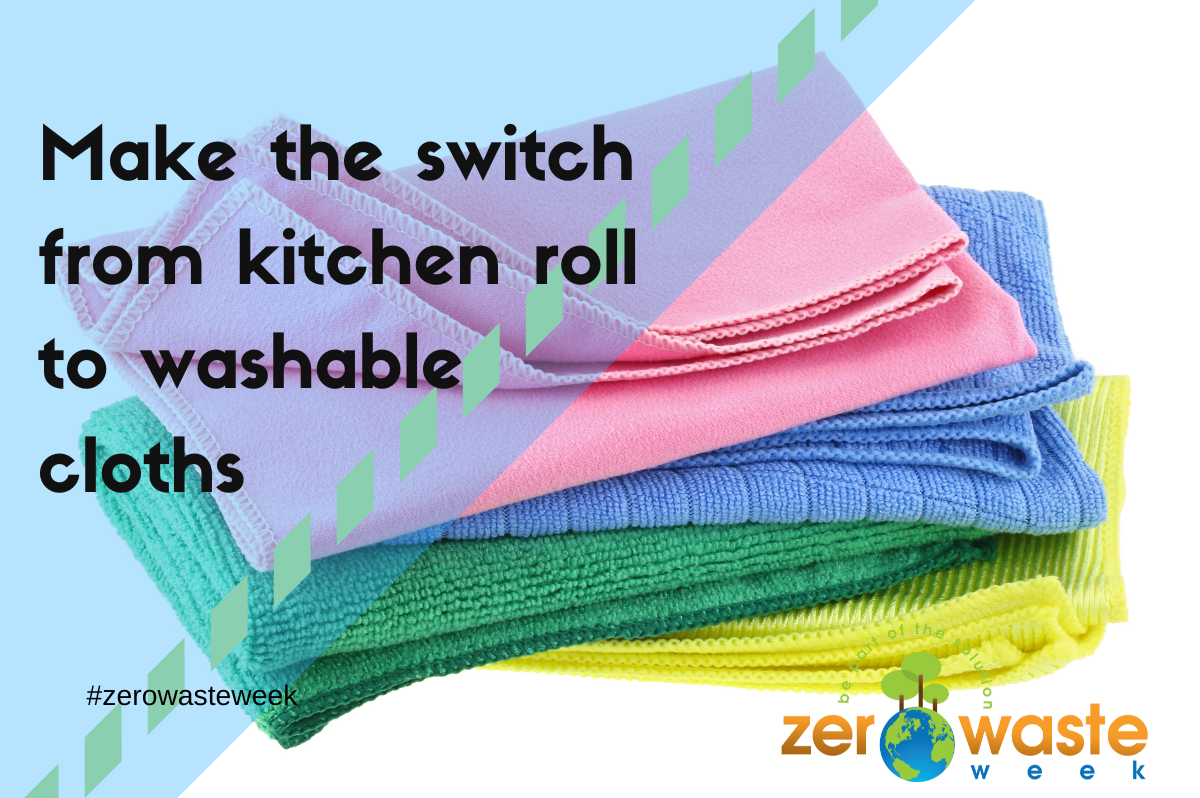
I used to get through at least 2 rolls a week. I’d use it to wipe over the kitchen worksurfaces as well as mopping up spills. By switching to washable cloths I’m saving an embarrassingly huge £78 per year. I’ve also switched to using cotton handkerchiefs, instead of using kitchen towel to blow my nose, which you can read about here.
Wipes, wipes, wipes
What with make up wipes, floor wipes and personal wipes, we live in a disposable culture! Swap make up wipes for an old fashioned flannel, use your ecloth on the floor and make your own personal wipes with equal parts witch hazel and grapeseed oil. You’ll save an eye-watering £63 per year.
Batteries
Rechargeable batteries mean your remote control and kid’s favourite toys will never be without power again. And you’ll never go to take that perfect photograph and find yourself out of juice. Even cheap disposable batteries cost around £1 each, and according to Which magazine, some of their best-performing rechargeables cost less than £7 per pack, so you do the maths…
Ditch bottled water
You already pay to have water available in your kitchen tap, so get a reusable bottle and start refilling. If you take your own, rather than buy a bottle of water every day for lunch, savings could tot up to a thirst quenching £150 per year. You can download the refill app, to discover cafes, bars and restaurants throughout the UK where you can your bottle refilled for free.
Sanitary protection
How much are you spending per month on keeping yourself fresh and clean? By switching to a reusable option such as the mooncup, period pants or washable pads, you’ll stop seeing red. You could save between £40 – £80 per year

Nappies
Does your little prince or princess still need nappies? Make the switch to washables and you could be putting £180 a year into their University fund. When I told a new parent that if King Henry VIII had worn disposable nappies, they’d still be in landfill today, that made him commit to the switch. You can read more about the tips I shared in this Guardian article.
Reuse
Do you grow your own? All that gardening equipment can be expensive. So save those toilet roll inners for instant biodegradable pots, make your own compost from veg peelings and slather those coffee grounds under your roses.
Save it up
The postman brings you freebies every day in the form of stationery. I haven’t bought a jiffy bag, roll of bubble wrap, pack of rubber bands or envelope for over a decade – I can’t begin to imagine how much money I’ve saved!
Beg and borrow, but don’t steal
My local library is one of my favourite resources, I can borrow books for three weeks for free! By using a scheme like Streetbank you can borrow tools and equipment rather than buying new and by signing up to Freecycle you can get all manner of unwanted goodies for nothing.
Over to you – how does reducing waste save you money? For more ways on how adopting the 5 R’s can save you money, click here.
I agree that cutting waste saves a lot of money. I have come to appreciate that bin contents are all things we have paid for.
Reusable alternatives to disposable items often require an inital cash outlay, but I have found that they generally pay for themselves very quickly and start saving us money.
We do some of the things above but I put my sandwiches in a lunch box rather than wrapping them in a wrap n mat. We also use loose tea instead of tea bags – not only cheaper, and in smaller packaging, but much better quality.
I use cloth handkerchiefs, which are much nicer than tissues, and we use cloth table napkins.
I cannot wean my husband off kitchen roll completely, but we now have perhaps 2 rolls a year rather than 1 per fortnight.
We no longer use bin liners at all. If our bin gets dirty, we rinse it out. If we occasionally need to put anything particularly dirty in the bin, we wrap it in a small (second hand) plastic bag. I wonder now why we ever felt the need to wrap things before putting them in the bin! I also wonder why I ever felt the need to wrap sandwiches in cling film before putting them in my lunch box!
I am sure we do a lot of wasteful things by habit rather than from need.
I also mend a lot of our clothes, etc. that previously I would have replaced. Those that are past it I make into cleaning cloths and rags. As well as the obvious uses, I use envelopes that have come in the post for storing seeds from the garden in, and cut blank panels off them to use to write notes on, or for children to draw on.
Some fantastic tips there! My next mission is to start using rechargeable batteries. I brought a rechargeable unit for my sons Wii and it has saved us a fortune in new batteries and the unit itself only cost me £5!
What is a ‘wrap ‘n’ mat’??? I’ve never heard of that before *off to google*
Thank you for sharing on #ThriftyThursday 🙂
So glad we are out of the nappy stage – never did quite bring myself to do washable nappies, although did buy compostable ones from germany:)
What a fab post! I’m so with you on reducing waste in all areas 🙂 love the last bit especially. I’ve been a charity shop and eBay addict for years now, and just can’t understand how a person would rather go to Primark than buy secondhand – makes me sad. Food waste is my biggest bug bare, there’s just no need for it…
#tthriftythursday
Great idea, so get the shops promoting real cloths at reasonable prices, and stop the advertising telling everyone that their “Kitchen Paper” is the best there is and works better.
haha! Yep, let’s do that!
[…] 4) Switch from using kitchen roll to microfibre cloths. This can save you up to an amazing £78 per year! […]